Deposit method quirks: how payment choices shape bonus access across British operators
Harper Wolf · Sep 3, 2026
Deposit Method Variations Influence Bonus Eligibility at UK Betting Platforms
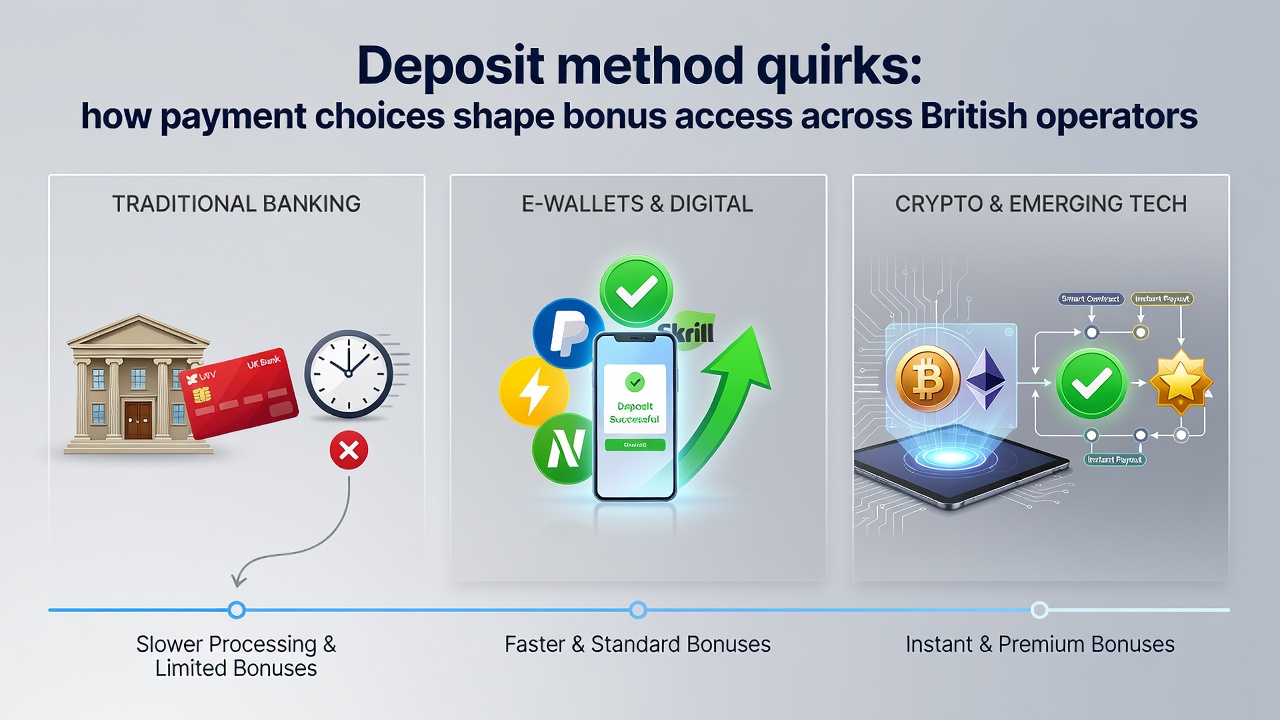
Payment selections at British operators create distinct pathways for bonus qualification, since different methods carry unique processing rules that operators enforce to manage risk and comply with broader financial standards. Debit cards often receive priority treatment in welcome packages because they link directly to verified bank accounts, whereas credit cards face exclusion from most promotions following long-standing industry practices that separate gambling transactions from revolving credit lines. E-wallet services present another layer of complexity, with platforms like PayPal and Skrill frequently qualifying for standard deposit bonuses yet triggering separate verification steps that delay fund access until identity checks complete. Bank transfers meanwhile cater to larger deposits and sometimes unlock tiered offers unavailable through faster methods, although these require longer clearance periods that can span several business days before bonuses activate.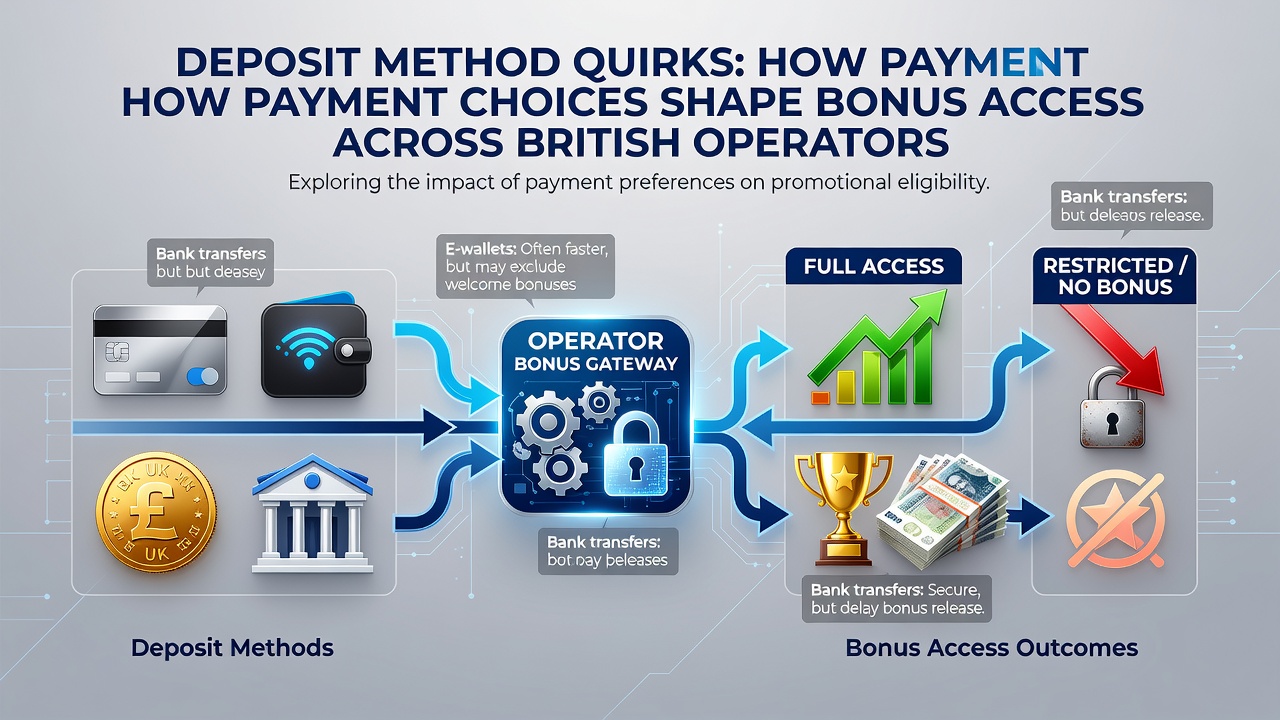
Payment selections at British operators create distinct pathways for bonus qualification, since different methods carry unique processing rules that operators enforce to manage risk and comply with broader financial standards. Debit cards often receive priority treatment in welcome packages because they link directly to verified bank accounts, whereas credit cards face exclusion from most promotions following long-standing industry practices that separate gambling transactions from revolving credit lines. E-wallet services present another layer of complexity, with platforms like PayPal and Skrill frequently qualifying for standard deposit bonuses yet triggering separate verification steps that delay fund access until identity checks complete. Bank transfers meanwhile cater to larger deposits and sometimes unlock tiered offers unavailable through faster methods, although these require longer clearance periods that can span several business days before bonuses activate.Card-Based Deposits and Their Bonus Restrictions
Operators apply specific filters to card transactions because debit options align more closely with regulatory expectations around immediate fund sourcing, while certain prepaid cards encounter outright bans from bonus pools to prevent multiple account exploitation. Research from the National Council on Problem Gambling shows that payment method policies affect roughly 40 percent of new account sign-ups across regulated markets, with debit card users gaining quicker entry to matched deposit offers compared to those relying on alternative instruments. Those who select Visa or Mastercard debit entries typically encounter straightforward bonus crediting once the initial deposit clears, yet some sites impose minimum spend thresholds that vary by operator and can reach £10 or £20 before any promotional funds appear. Credit card attempts, by contrast, redirect users toward non-bonus deposit routes or prompt them to choose an approved alternative before the welcome package becomes available.E-Wallet and Digital Payment Nuances
Digital wallets introduce additional variables because many operators treat them as secondary methods that still grant bonus access but under modified terms, such as reduced percentage matches or extended wagering timelines. PayPal deposits, for instance, often bypass certain fee structures yet require users to maintain an active linked bank account to avoid temporary holds on promotional balances. Skrill and Neteller accounts sometimes carry internal restrictions that block bonus participation entirely at select platforms, prompting users to switch methods mid-registration if they discover the limitation only after account creation. Observers note that these quirks have persisted into September 2026, where operators continue refining their payment hierarchies in response to evolving transaction monitoring requirements across European markets.